Hypnotherapy for Children

Helping Children Feel Calmer, More Confident and More in Control

When your child is struggling, you want to do everything you can to help them.

Perhaps they’re anxious, frightened of something, struggling to sleep, worrying about school or exams, or have developed a habit they can’t seem to stop. Sometimes children can’t even explain why they’re feeling the way they do — they just know that something doesn’t feel right.

Children have wonderful imaginations, and this can make hypnotherapy particularly enjoyable for them. Rather than therapy feeling serious or intimidating, we can use imagination, stories, visualisation and sometimes games to help them understand their feelings and begin responding differently.

I work with children aged 5 and over, adapting every session to the individual child, their age, personality and what they need help with.

I hold a current Enhanced DBS check and also regularly work with children through my voluntary work with Beavers, Cubs and Scouts.

What Can Hypnotherapy Help Children With?

Children and young people come to me for help with many different things, including:

Anxiety • Fears and phobias • Confidence • School worries • Exam and test nerves • Sleep difficulties • Nail biting • Thumb sucking • Concentration • Fear of the dentist • Sports or performance confidence • Bed-wetting and other habits

For physical symptoms or medical conditions, I would always want appropriate medical advice or assessment first.

hypnotherapy and child blowing bubbles
hypnotherapy and child dressed up as superhero

Why Children Can Respond So Well to Hypnotherapy

Children spend a huge amount of time using their imagination.

They daydream, pretend, create stories, become absorbed in television or computer games and imagine themselves in completely different worlds.

In many ways, they’re already doing something very similar to what we ask adults to learn during hypnosis!

With younger children, I don’t need to give them a complicated explanation of hypnosis. Instead, I might describe it as:

  • Pretending or imagining
  • Spending a bit of time daydreaming
  • Pretending to be somewhere else
  • Something that you already know how to do, but maybe you didn’t know you knew

Can I stay with my child during the session?

This is something many parents understandably ask.

Whether you stay in the therapy room will depend on your child’s age, maturity and, importantly, what makes them feel most comfortable.

Some children feel safer initially having a parent with them. Others find it easier to talk, use their imagination and become involved in the session when they’re on their own.

We’ll decide this together rather than having one rule for every child.

Things I may consider include:

  • Whether your child feels more comfortable with you there
  • Whether they might feel more able to talk freely without you in the room
  • Whether having you present helps them feel safe and settled
  • Your child’s age and maturity
  • Whether it would be useful for you to hear what we’re doing so you can continue some of the work at home
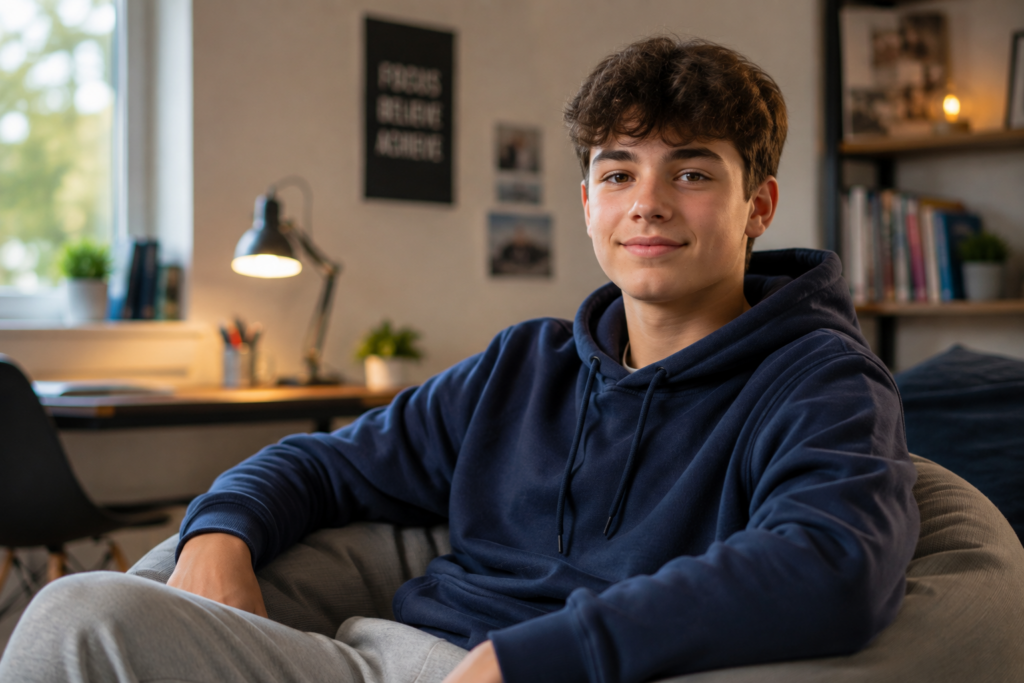
Teenager feeling calm and confident with hypnotherapy
Child relaxing and using her imagination during hypnotherapy

What If My Child Comes Into the Therapy Room Without Me?

My log cabin has doors you can see through, looking directly into the therapy room, so you can still see your child while you’re waiting.

With younger children, there may also be times when I particularly want you involved because what happens between sessions can be just as useful as what we do together.

I may give you and your child something to practise at home. Depending on what we’re working on, that could involve:

listening to recordings of their stories, playing a game, practising something they’ve learnt or perhaps keeping a star chart.

For me, it’s about finding the approach that works best for your child, rather than expecting every child to respond in exactly the same way.

What Happens During a Children’s Hypnotherapy Session?

Every child is different, so I adapt the session to suit their age, personality and the reason they’ve come to see me.

We usually begin by having a chat and getting to know each other. I want your child to feel comfortable with me before we start doing anything else.

There’s no pressure to immediately talk about difficult feelings or explain everything perfectly.

With younger children especially, therapy doesn’t have to feel like therapy.

We might use stories, imagination, games, metaphors, drawing or visualisation. With older children and teenagers, the sessions may feel a little more like the hypnotherapy I use with adults, but I’ll still adapt everything to the individual young person.

Hypnosis itself can be very simple.

I might ask your child to imagine somewhere they feel happy and safe, picture themselves doing something confidently, become absorbed in a story or use their imagination to experience a situation differently.

Because children already spend so much time pretending, imagining and daydreaming, this can often feel very natural to them.

Parent reassuring a child before a hypnotherapy session
Confident child arriving at school feeling calm and happy

I Want Your Child to Feel Involved

I don’t want a child sitting in my therapy room feeling as though something is being done to them because an adult has decided they need fixing.

Wherever possible, I want them to understand what we’re working towards and feel involved in making those changes.

We can talk about:

What would they like to be different?

How would they like to feel instead?

What would they be able to do if this problem wasn’t getting in their way?

That gives us something positive to work towards together.

And sometimes children come up with wonderfully imaginative answers that give me exactly what I need to build their hypnosis around.

And Yes… They Are Still in Control

Children don’t lose control during hypnosis.

They can hear me, talk to me, move around and open their eyes whenever they want to.

There is no magic spell and I’m certainly not going to make them cluck like a chicken. 😂

For children, I prefer to think of hypnosis as using something they’re already naturally very good at — their imagination — in a way that can help them.

Frequently Asked Questions About Hypnotherapy for Children

What age can children have hypnotherapy?

I work with children from around 5 years old, although age isn’t the only thing I consider.

Every child develops differently, so I’ll also consider their maturity, ability to engage with imagination and what they need help with.

If you’re unsure whether hypnotherapy would be suitable for your child, we can discuss this before booking.

Do You Have a DBS Check?

Yes. I hold a current Enhanced DBS check and regularly work with children through my voluntary work with Beavers, Cubs and Scouts.

Working with children is something I’m very comfortable with, and I understand how important it is for parents to feel confident about the person they are trusting with their child.

I aim to create an environment where children can feel safe, comfortable and able to be themselves, while parents can feel reassured about the way I work.

Does my child need to understand what hypnosis is?

No.

Particularly with younger children, I don’t need to give them a complicated explanation about hypnosis.

We might simply talk about imagining, pretending, daydreaming or making pictures in their mind — things children often already do naturally.

The experience can be adapted to language they understand and feel comfortable with.

What if my child doesn’t want to have hypnotherapy?

This is important.

I want your child to feel involved in the process rather than feeling that they’ve been brought to see me because somebody else thinks they need to change.

They don’t need to arrive desperately enthusiastic about hypnotherapy — particularly if they don’t really know what it is! — but they do need to be willing to engage with me.

If a child really doesn’t want to participate, forcing the situation is unlikely to create a positive therapeutic experience.

Will I be in the room with my child?

Possibly.

This depends on your child’s age, maturity, what we’re working on and where they feel most comfortable.

Some children prefer having a parent nearby, particularly at first. Others engage more freely when they’re on their own.

My waiting area has large patio doors looking directly into the therapy room, so even when you’re not sitting in the room, you can still see your child.

We’ll decide what’s appropriate together.

Will my child tell you things they don’t tell me?

Children and young people sometimes find it easier to talk about certain things with someone outside their immediate family.

Before we begin, I’ll make sure both you and your child understand how I work and the boundaries around privacy and safeguarding.

If something raises a concern about a child’s safety or wellbeing, I cannot promise to keep that information secret.

Can hypnotherapy help with anxiety in children?

Hypnotherapy may help children learn ways of feeling calmer and responding differently to anxious thoughts and situations.

Because every child is different, we’ll look at what’s happening for your child, how it’s affecting them and whether hypnotherapy is an appropriate option.

Can hypnotherapy help with fears and phobias in children?

It may help with fears and phobias by using imagination, stories, visualisation and other techniques to help a child develop a different response to whatever has been frightening them.

The approach would be adapted to the child’s age and particular fear.

Can hypnotherapy help with school or exam nerves?

Yes, this is something we can work on.

Sessions might focus on confidence, managing anxious thoughts, remaining calmer during tests or exams and mentally rehearsing going into school feeling more capable and in control.

How many sessions will my child need?

It depends on what we’re working on, how long it’s been happening and how your child responds.

We’ll discuss this together and review how things are progressing rather than continuing sessions unnecessarily.


Want to Know Whether Hypnotherapy Could Help Your Child?

Watching your child struggle can be difficult — particularly when you know they want things to feel different but aren’t sure how to make that happen.

Sometimes children just need another way of looking at things, another way of responding and someone who can speak their language.

That’s where imagination can become incredibly powerful.

If you’d like to talk to me about what’s happening for your child, your free initial consultation gives us an opportunity to discuss their needs and whether hypnotherapy may be suitable.